Tumalo Acreage, ADUs and Hobby Farm Essentials
May 7, 2026
May 7, 2026
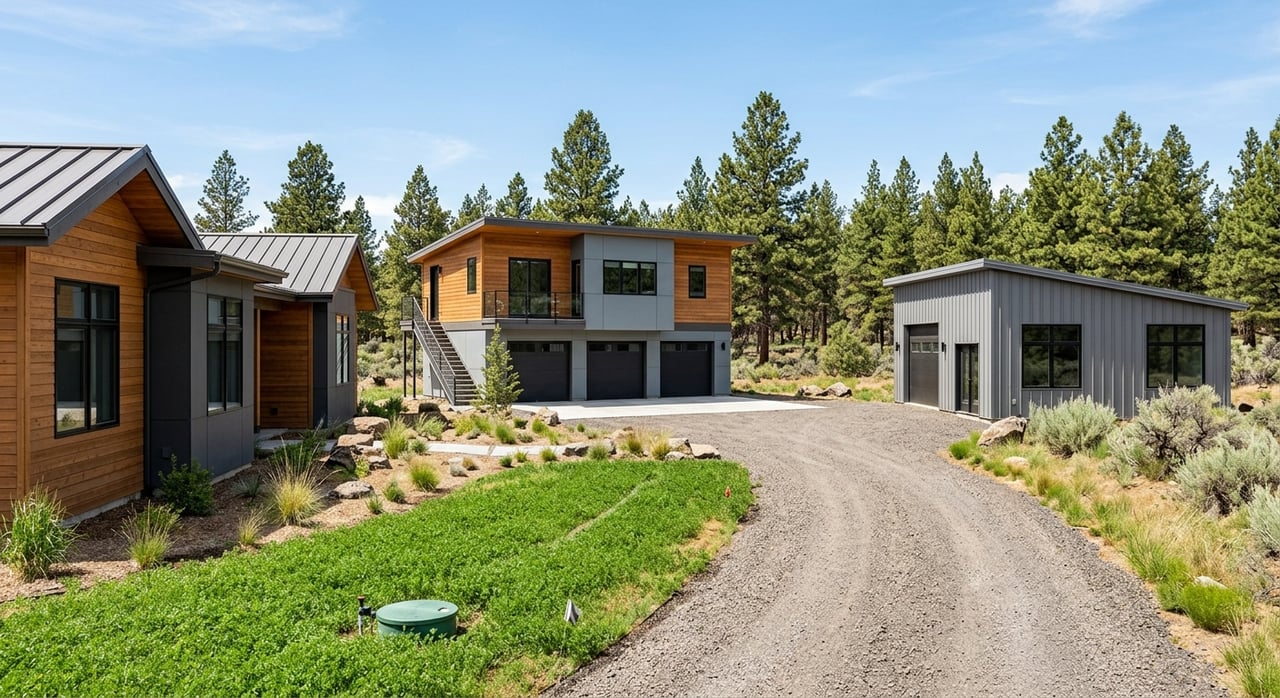
Dreaming about a little more land in Tumalo? You are not alone. For many buyers, the appeal is easy to understand: more privacy, more room for animals or equipment, and a rural setting that still keeps you close to Bend. But in Tumalo, acreage, ADUs, and hobby farm plans depend on much more than lot size alone. Let’s dive in.
Tumalo is a rural community about seven miles northwest of Bend, and that location is a big part of the draw. You get a quieter setting with more open space, while still staying connected to Bend for work, shopping, and recreation.
Deschutes County’s Tumalo Community Plan is built around preserving that rural character. The plan supports residential areas around the community perimeter and ties residential density to available water and sewage capacity. In practical terms, that means Tumalo is meant to feel rural, not suburban.
For you as a buyer, that often translates to larger parcels, more separation from neighbors, and more room for gardens, animals, outbuildings, and equipment. It is a lifestyle decision as much as a property decision.
One of the biggest mistakes buyers make is assuming Tumalo follows one simple set of land-use rules. It does not. Parcels in and around Tumalo can fall under different zoning districts, and those differences can directly affect your plans.
Some parcels are in Tumalo Residential districts, including TUR and TUR5. Others may be in broader county acreage zones like RR10 or MUA10. Each of these zones allows different uses and has different development standards.
RR10 and MUA10 are the county zones that often fit the classic acreage lifestyle. These zones allow single-family dwellings, agriculture, small-scale horse stables, and limited home businesses, with 10-acre minimums for standard land divisions.
If your goal is a straightforward horse setup, garden space, or a more traditional small-acreage property, these zones may align better with that vision. Still, you need to confirm the exact zoning of any parcel before making assumptions.
Tumalo Residential districts are different. The county describes the Tumalo Residential District as allowing single-family dwellings, two-family dwellings, low-intensity home occupations, and agricultural uses with minimal standards.
That can sound flexible at first glance, but it does not mean every rural-style use is automatic. If you are picturing barns, animals, extra structures, or business-related use, it is important to verify what is actually allowed on that specific parcel.
If you are shopping for a hobby farm property, zoning should be one of your first filters. The county’s planning language also says that new uses in Tumalo should not adversely affect nearby EFU agricultural lands.
That means the parcel’s setting, surrounding land, and land-use rules all matter. A property that looks ideal from the road may not support the exact setup you have in mind.
ADUs are one of the most requested features in Central Oregon, especially for buyers thinking about long-term flexibility. You may want space for extended household use, a future rental, or a second structure that adds function to the property.
In Tumalo, though, you should treat ADU potential as a parcel-specific question, not a standard feature of acreage. Deschutes County says rural ADUs are allowed only in rural residential exception areas, and unincorporated communities such as Tumalo are not included.
This is the key takeaway: acreage does not automatically mean ADU potential. If a property is in the Tumalo area, you need to confirm whether the parcel actually qualifies under county rules.
The county also says ADUs are not allowed in resource zones such as EFU, F1/F2, or OS&C. So if an ADU is part of your plan, verification needs to happen early.
In parts of the county where rural ADUs are allowed, the standards are still fairly tight. The county limits properties to one ADU, caps usable floor area at 900 square feet, and requires the ADU to be within 100 feet of the primary dwelling.
There are also infrastructure and use requirements. Separate addressing for emergency services is required, a septic site evaluation must happen before the formal development application, and the setup is intended for long-term use rather than vacation rental use.
This point matters more than many buyers realize. Deschutes County defines a guest house as temporary guest quarters with no kitchen or kitchenette.
So if you see a guest suite or detached guest structure, that does not automatically mean it can function as a rentable secondary dwelling. A guest house and an ADU are treated differently under county land-use and wastewater standards.
In Tumalo, water is not just a nice feature. It is a major part of how land functions and how ownership costs work over time.
Tumalo Irrigation District administers about 8,110 acres of irrigation water rights, serves roughly 680 landowners, and delivers water from Tumalo Creek, the Deschutes River, and supplemental storage at Crescent Lake. If you are buying acreage for pasture, gardens, landscaping, or small agricultural use, irrigation can be central to the property’s value.
The district’s definition of beneficial use is tied to crop production or maintained grass and landscaped areas. That means irrigation water supports practical land use, not just the idea of having extra land.
You should also know that the district finances itself largely through annual assessments on irrigable acres and accounts with irrigation rights. Patrons remain responsible for those assessments even if deliveries are reduced or stopped during shortages.
For buyers, that creates a two-part question. First, do irrigation rights transfer with the property? Second, what are the ongoing assessments and responsibilities tied to those rights?
A property with irrigation can offer major lifestyle value, but it also comes with management, billing, and seasonal considerations. That is worth understanding before you fall in love with the view.
On rural property, wastewater planning can shape what is actually possible on the site. Deschutes County requires onsite wastewater treatment systems where public sewer is not available, and any new or altered onsite system requires a permit.
Before that permit can be issued, the county requires an approved site evaluation. That process is one reason rural purchases deserve extra diligence, especially if you want to add structures or additional plumbing.
County site-plan rules for onsite systems require attention to features like structures, septic components, driveways, access roads, canals, irrigation ditches, rimrock, and nearby wells. In other words, the county looks closely at how the whole site functions.
If you are considering an ADU or second dwelling, the existing septic system may need to be upgraded or replaced with a separate system. That can affect budget, timing, and overall feasibility.
The Tumalo Community Plan reinforces that lot sizes should be based on the land’s capacity for water and wastewater facilities. It also supports protection of the Tumalo Town Ditch easement and domestic water system.
So when you evaluate acreage, think beyond the lot lines. Water access, wastewater capacity, and site constraints all help determine whether a property truly fits your goals.
Tumalo acreage can be a great fit if you want space and flexibility near Bend. But rural ownership usually comes with more hands-on responsibility than a typical in-town home.
You may need to manage irrigation, maintain driveways or access points, keep vegetation under control, and stay on top of septic system needs. That is part of the value of rural living, but it is also part of the workload.
For some buyers, that tradeoff is exactly the point. You get more room to build the lifestyle you want, whether that means gardening, keeping animals where allowed, or simply enjoying privacy and open sky.
Rural buyers should also keep wildfire planning on the checklist. Deschutes County states that as of April 1, 2026, new dwellings and new accessory structures in unincorporated Deschutes County must comply with R327 fire-hardening requirements.
These rules are intended to reduce ignition risk from embers, heat, and flames. If you are planning new construction or accessory structures, this can affect both design decisions and budget.
If you are considering acreage, an ADU setup, or a hobby farm property in Tumalo, start with the basics before you focus on aesthetics. A beautiful parcel is only a great fit if the land can support your goals.
Here are some of the most important items to verify:
In Tumalo, the right property is usually the one that matches both your lifestyle and the land-use reality. When those two line up, acreage can be a smart and rewarding long-term move.
If you want help sorting through Tumalo acreage, evaluating a property’s real potential, or narrowing your search around your goals, The Vandenborn Group can help you approach the process with clarity and confidence.
We pride ourselves in providing personalized solutions that bring our clients closer to their dream properties and enhance their long-term wealth. Contact us today to find out how we can be of assistance to you!